Eyebrow
Healthcare Setting
Performance Criteria Checklist
A performance-based methodology for matching furniture to the real demands of every healthcare setting. Use this criteria to:
Match furniture to the level of performance each healthcare setting demands.
Specify furniture built for years of performance, not just day one.
Know what to look for and the questions to ask.
Back every selection with documented criteria and performance evaluation post-occupancy.
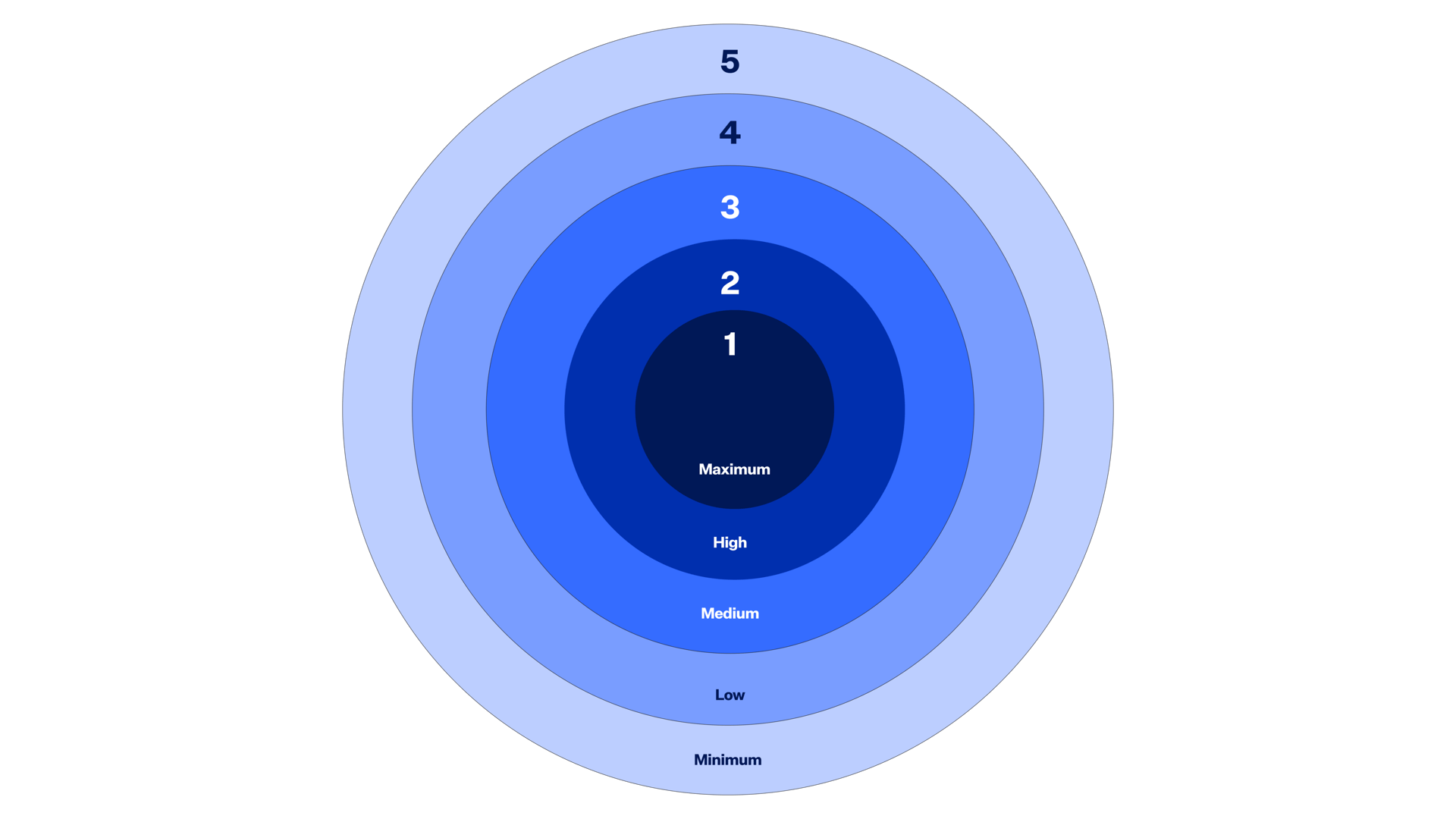
Settings performance scale
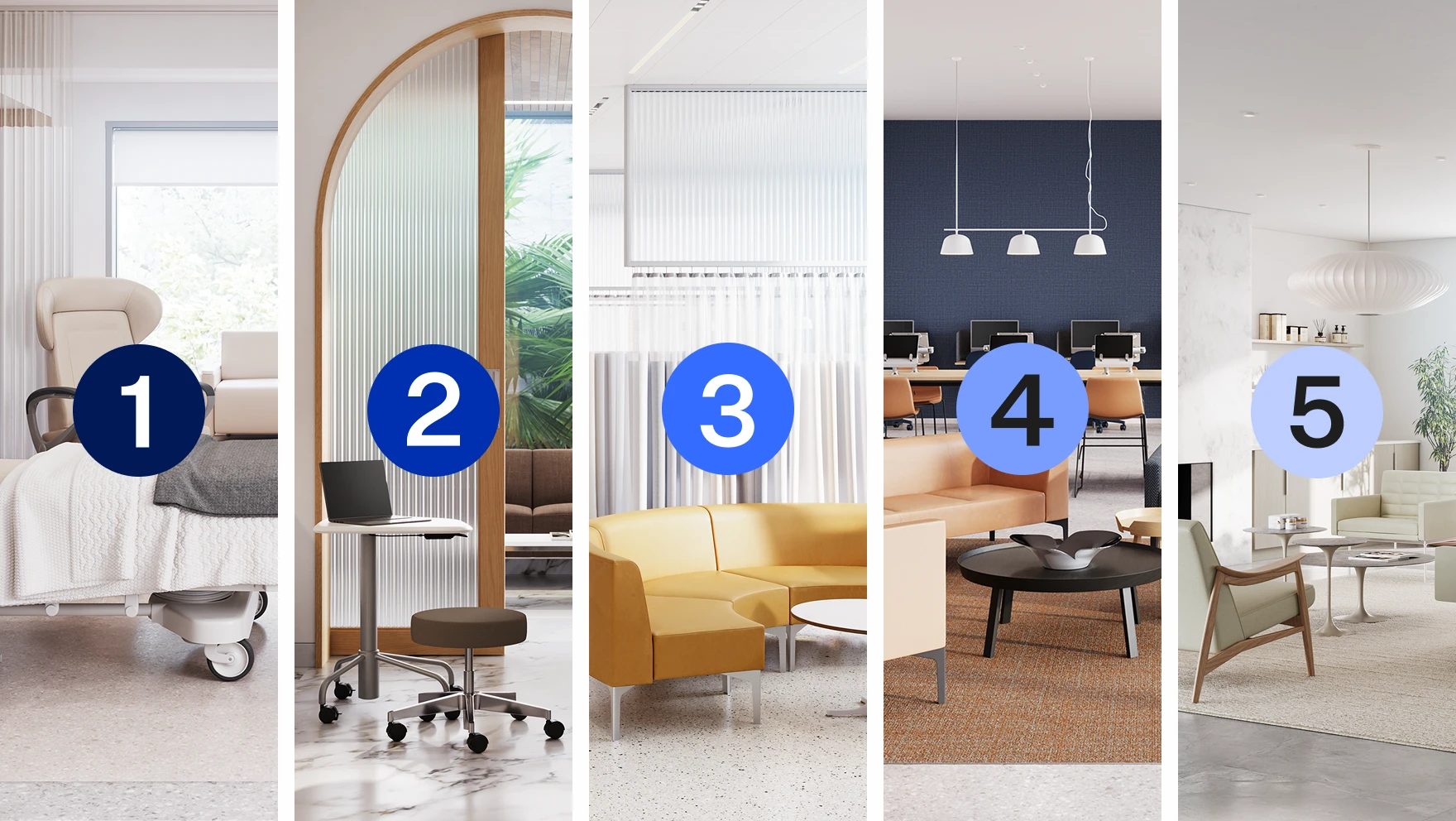
Every healthcare setting demands a specific level of performance from its furnishings. The scale is a starting point to guide design and product specification to meet setting performance.
Select a setting level to get started

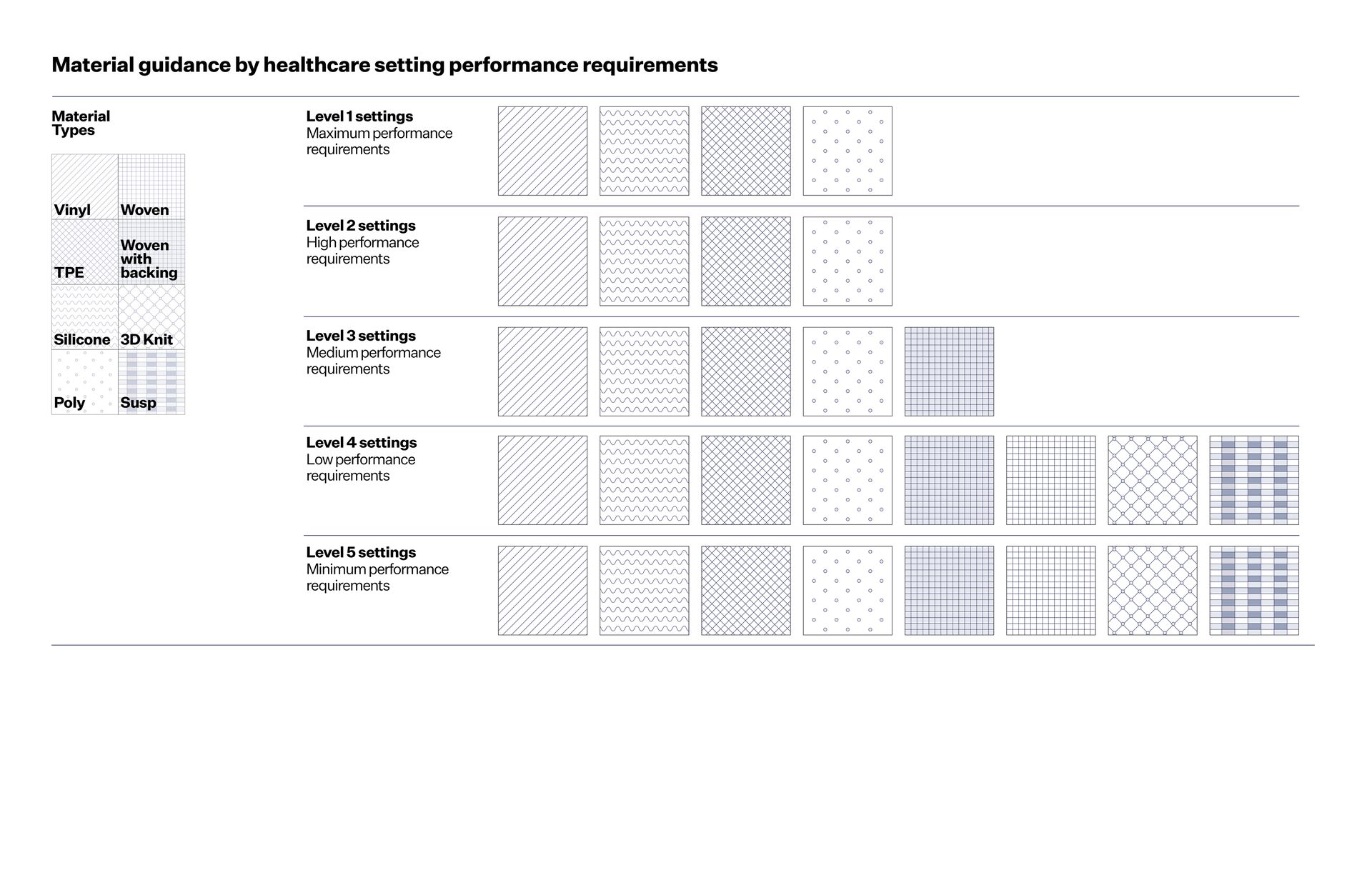
Level 1 settings
Maximum performance requirements
Examples include patient rooms, procedure rooms, emergency waiting areas, clinical labs.

Level 2 settings
High performance requirements
Examples include departmental or sub-wait areas, exam rooms, urgent care waiting, on-call rooms, and inpatient nurses stations.

Level 3 settings
Medium performance requirements
Examples include staff and family lounges, outpatient waiting areas, cafeterias/dining rooms, and outpatient nurse/team stations.

Level 4 settings
Low performance requirements
Examples include lobbies, consult rooms, physician workspaces, respite and wellness areas, meeting spaces, private offices, coffee bars, virtual care rooms, and case management offices.

Level 5 settings
Minimum performance requirements
Examples include specialty and boutique clinic waiting, chapels, reflection and meditation rooms, retail spaces.
Learn more about ocean-bound plastic and Aeron.
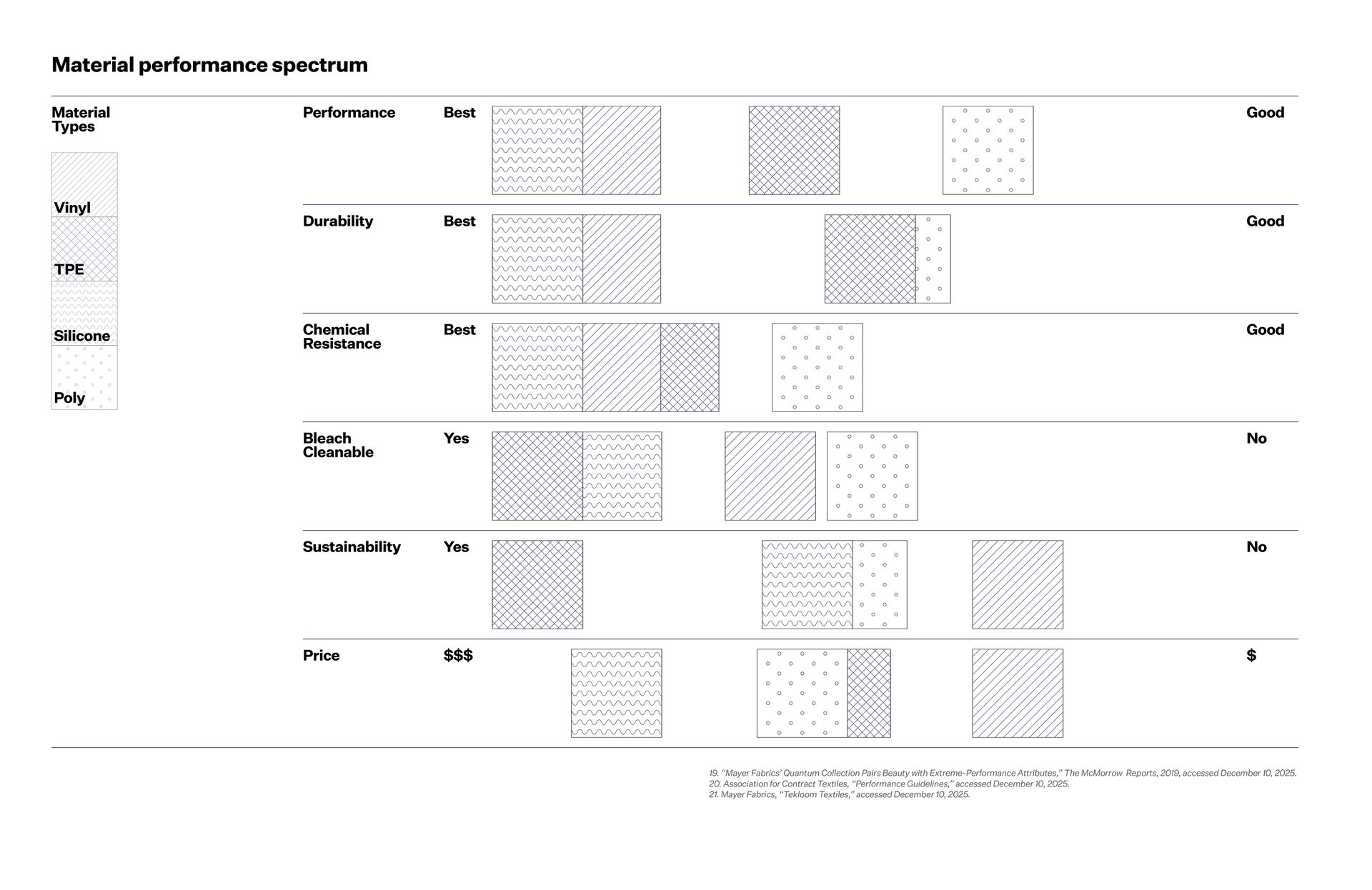
Material selection directly impacts how a healthcare setting performs.
As performance requirements change across settings, materials should be matched to the specific demands of the environment. Beyond aesthetics, upholstery and surface materials contribute to infection prevention, durability, safety, sustainability, and long-term value. Matching materials to the unique requirements of each setting helps ensure both clinical performance and a positive patient experience.